Panjat Pinang, East Java
Travelling back from Mount Bromo by motorbike, I detoured through Ngadas, a highland village in East Java, Indonesia, where I came across a Panjat Pinang competition. Panjat Pinang is a greasy-pole climbing contest commonly linked to Indonesia’s Independence Day celebrations. I arrived with a darker symbolic expectation shaped by René Depestre’s Le Mat de Cocagne, in which the greasy pole stands for rigged power and public control. What I encountered in Ngadas overturned that expectation entirely.
--SS, 2025
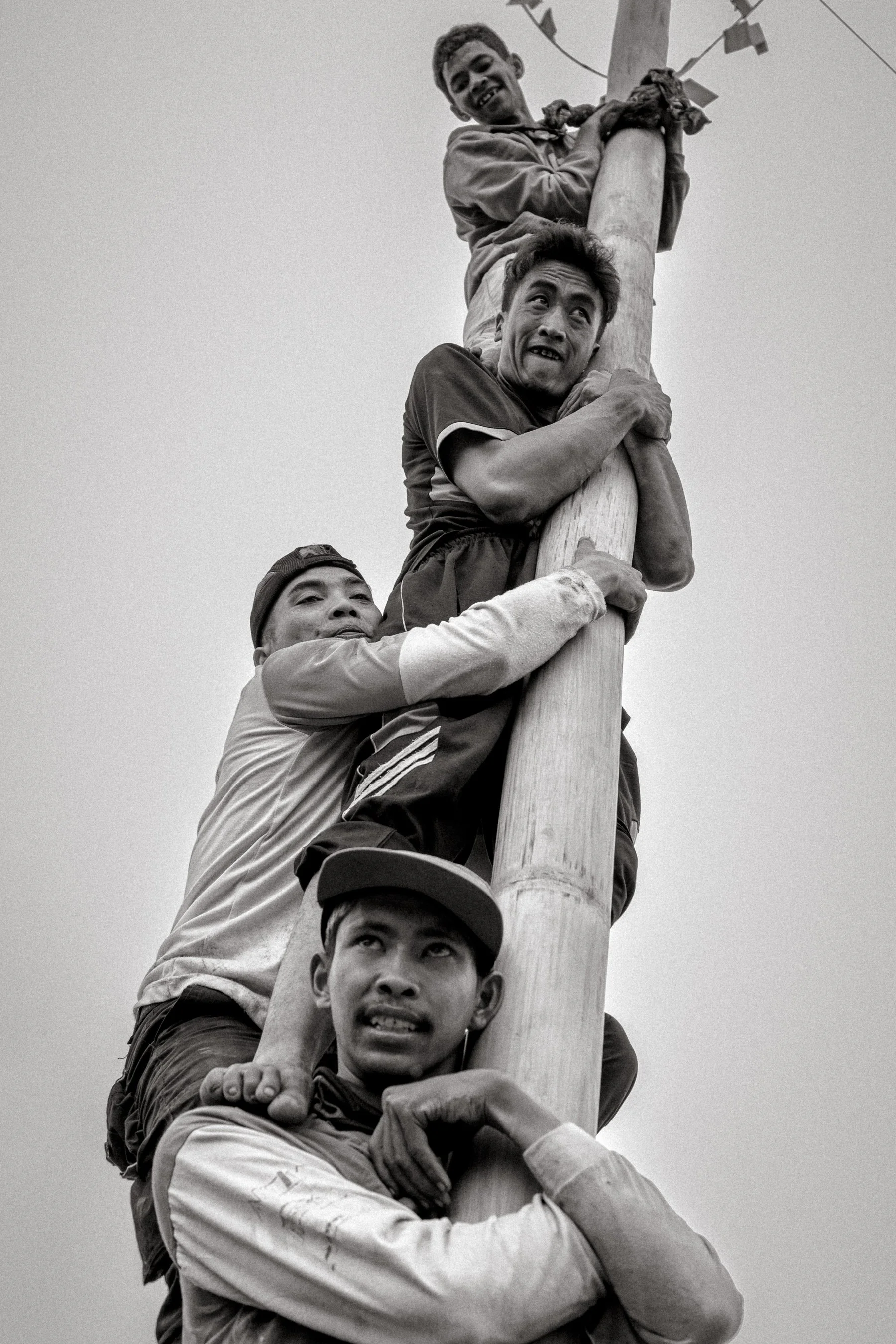
Competitors form a human ladder on the greased pole during a panjat pinang competition marking Indonesia’s Independence Day. Ngadas, East Java, Indonesia. 21 August 2025.
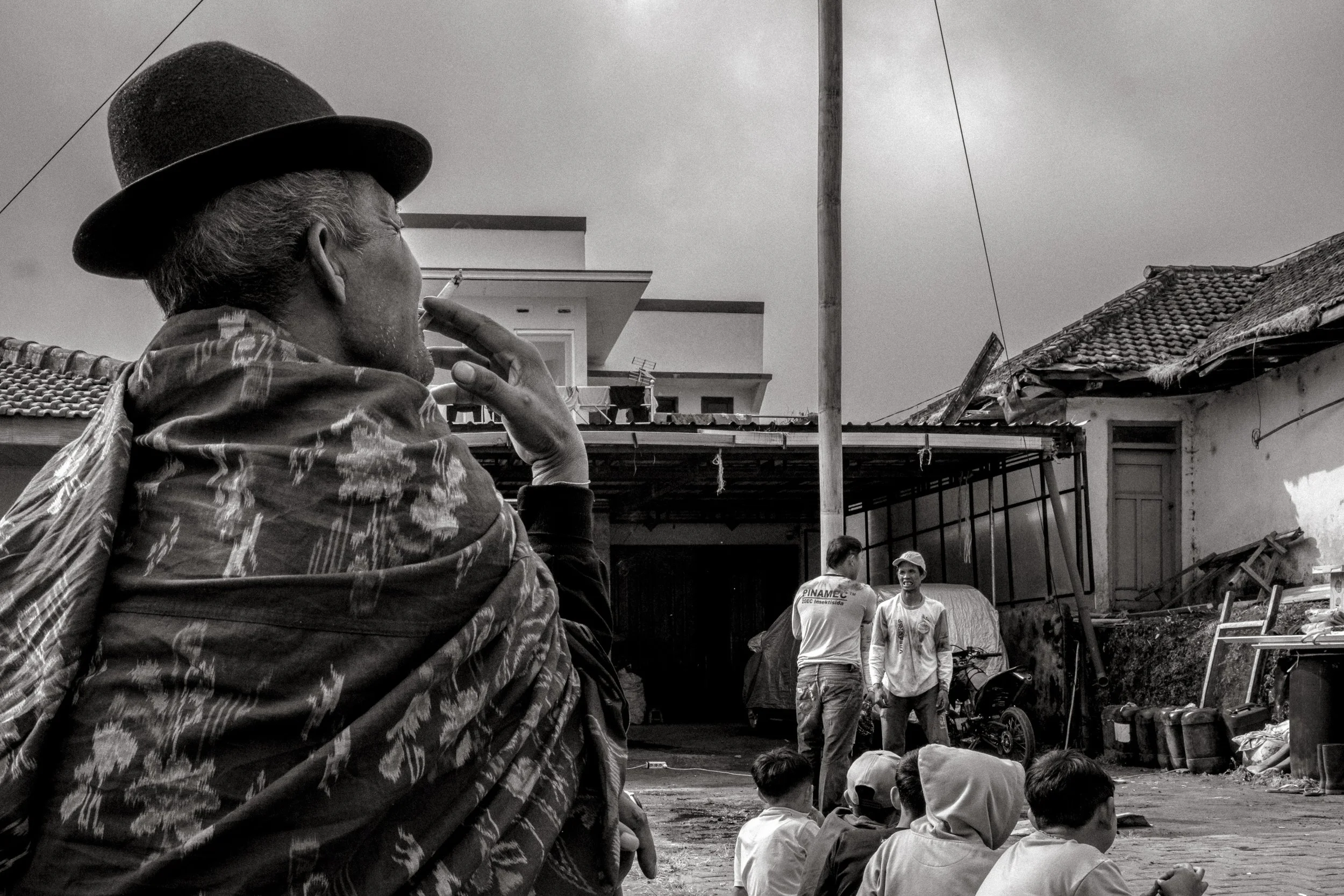
A spectator watches as climbers prepare to begin, a patterned cloth draped over his shoulders. Ngadas is one of the highest villages in Java at 2,150m, with temperatures dropping to as low as 8°C in August. Ngadas, East Java, Indonesia. 21 August 2025.
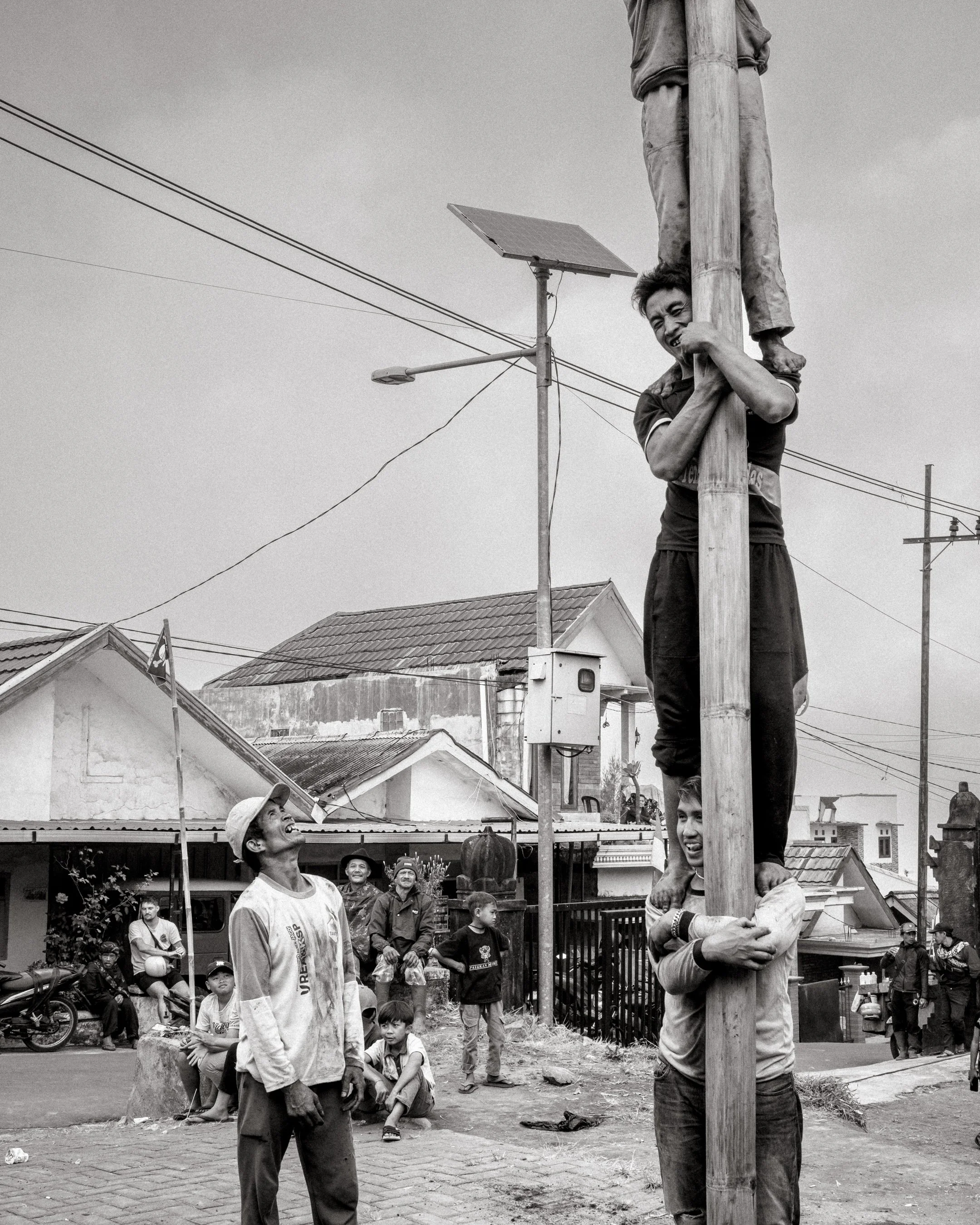
A team begins climbing as spectators watch from the street. Several climbers grin as they gather at the base. Ngadas, East Java, Indonesia. 21 August 2025.
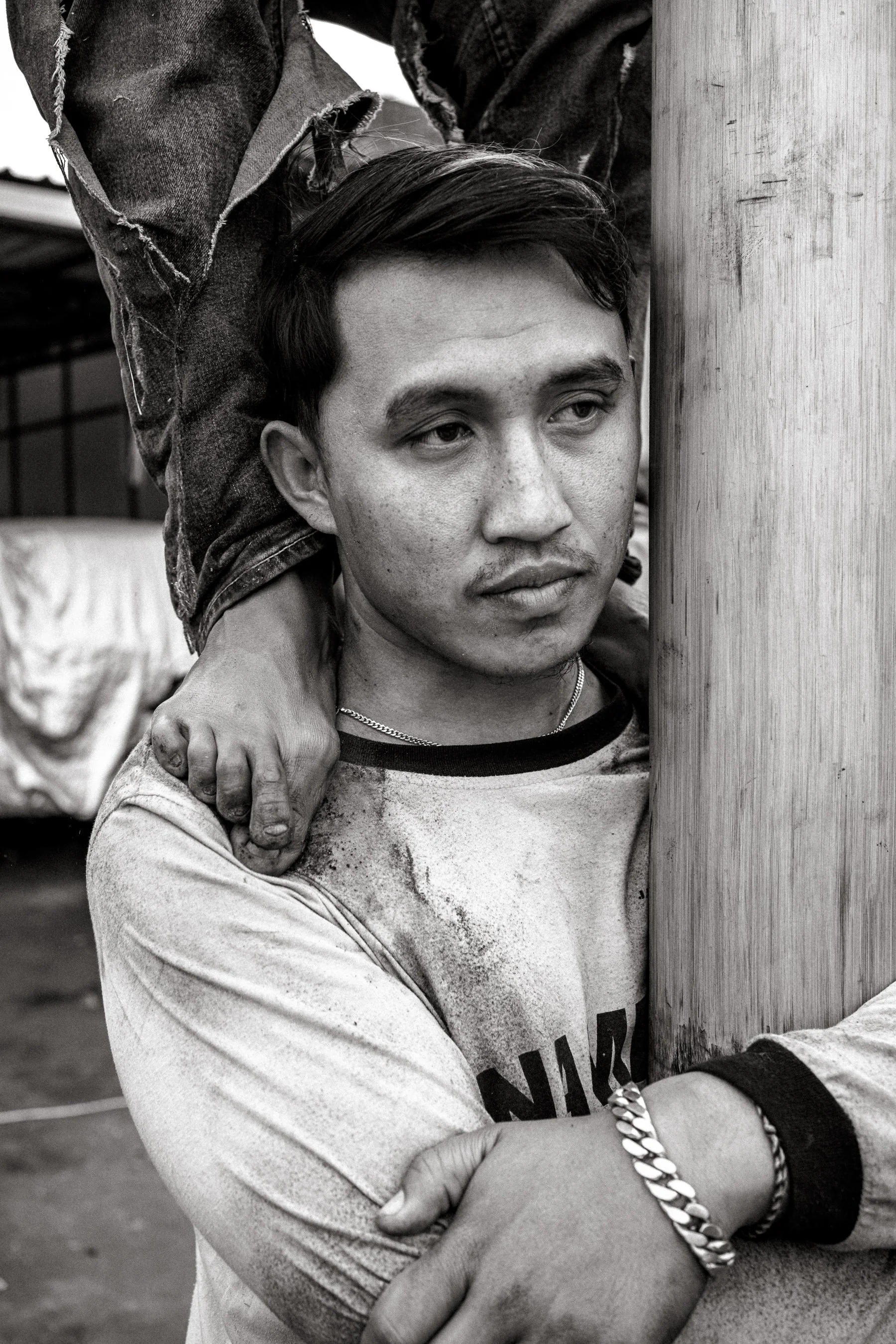
A competitor grips the pole mid-climb. This man remained at the base throughout, supporting others as they mounted and stood on his back, toes curled for grip. Ngadas, East Java, Indonesia. 21 August 2025.
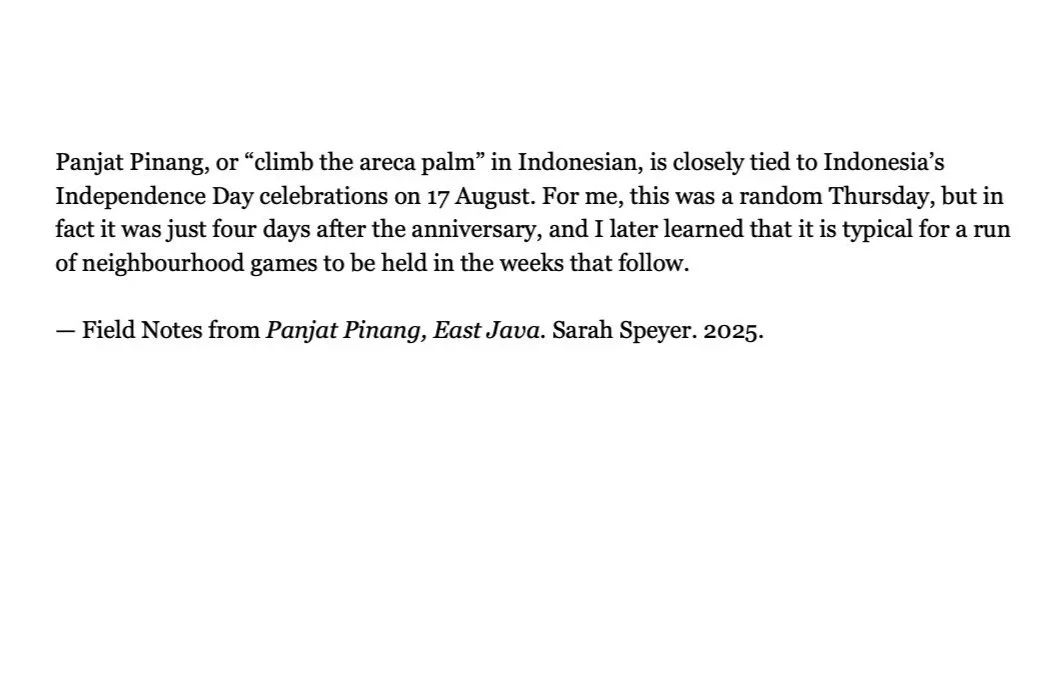
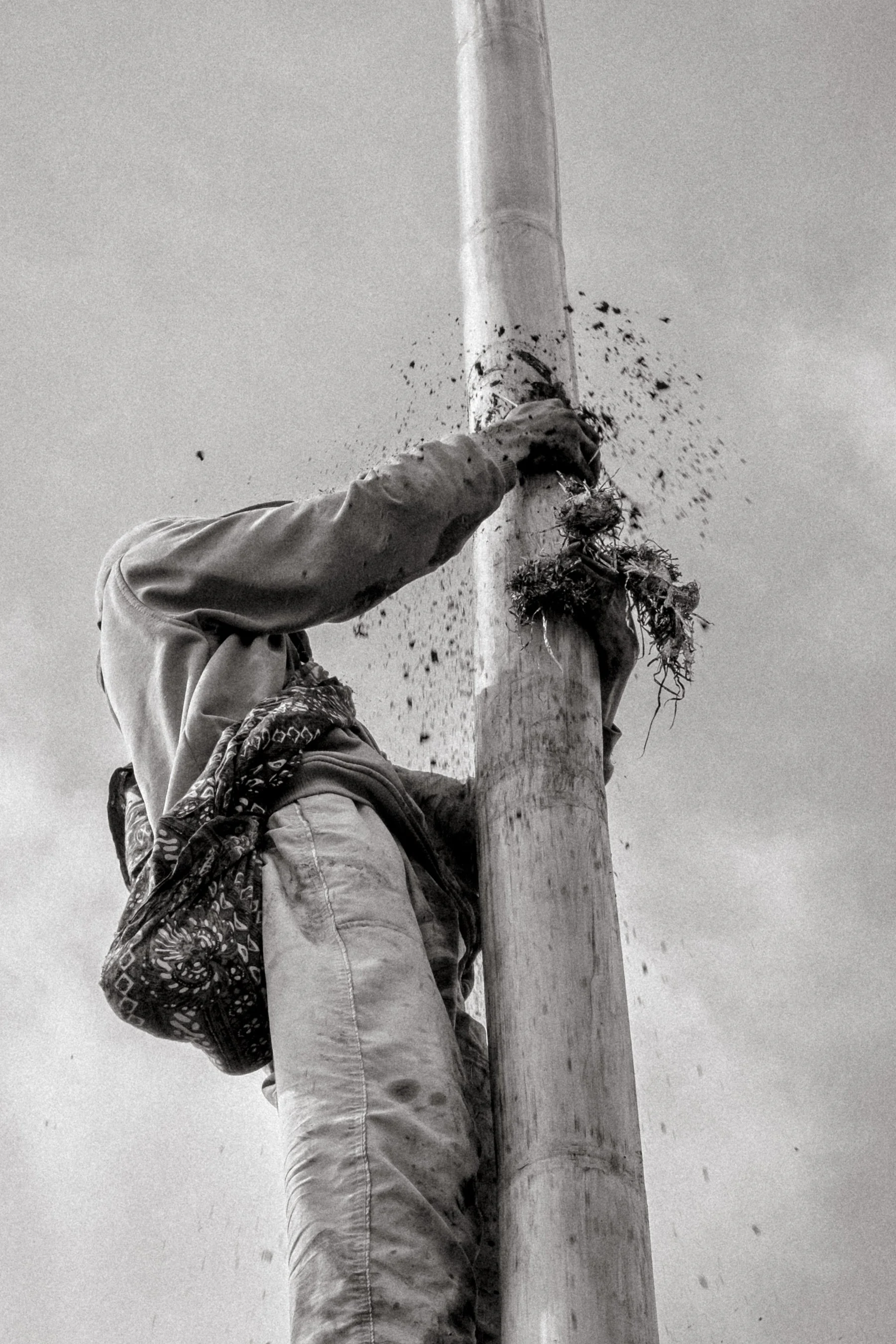
A climber uses a Tenggerese sapu-tangan (sarung), filled with mud to improve grip, as he ascends the greasy pole. Sapu-tangan are commonly worn as multipurpose work cloths. Ngadas, East Java, Indonesia. 21 August 2025.
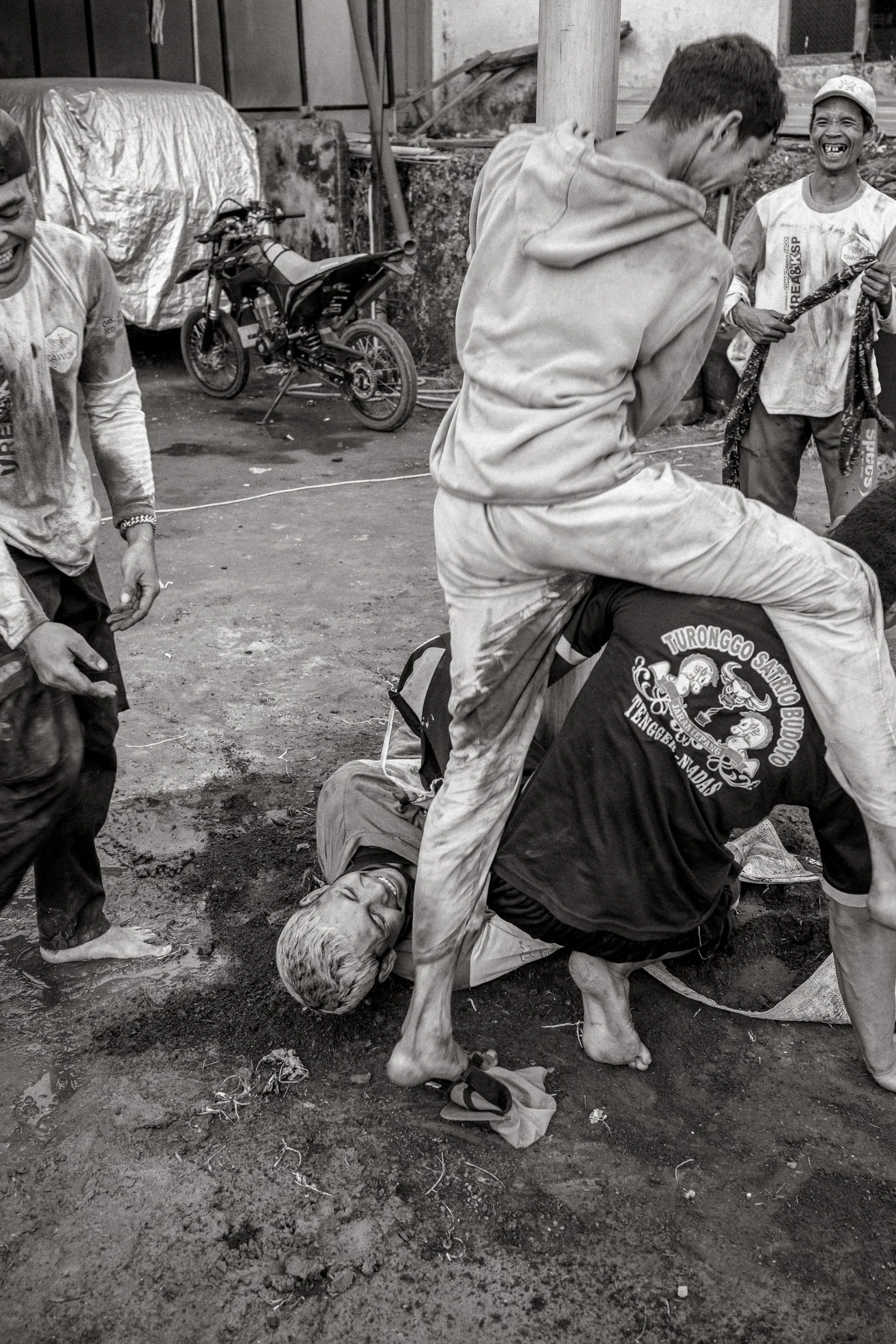
Climbers slip from the pole and fall into the mud, laughing. Participants wear a mix of local cultural group shirts and informal team prints rather than a single uniform. Ngadas, East Java, Indonesia. 21 August 2025.
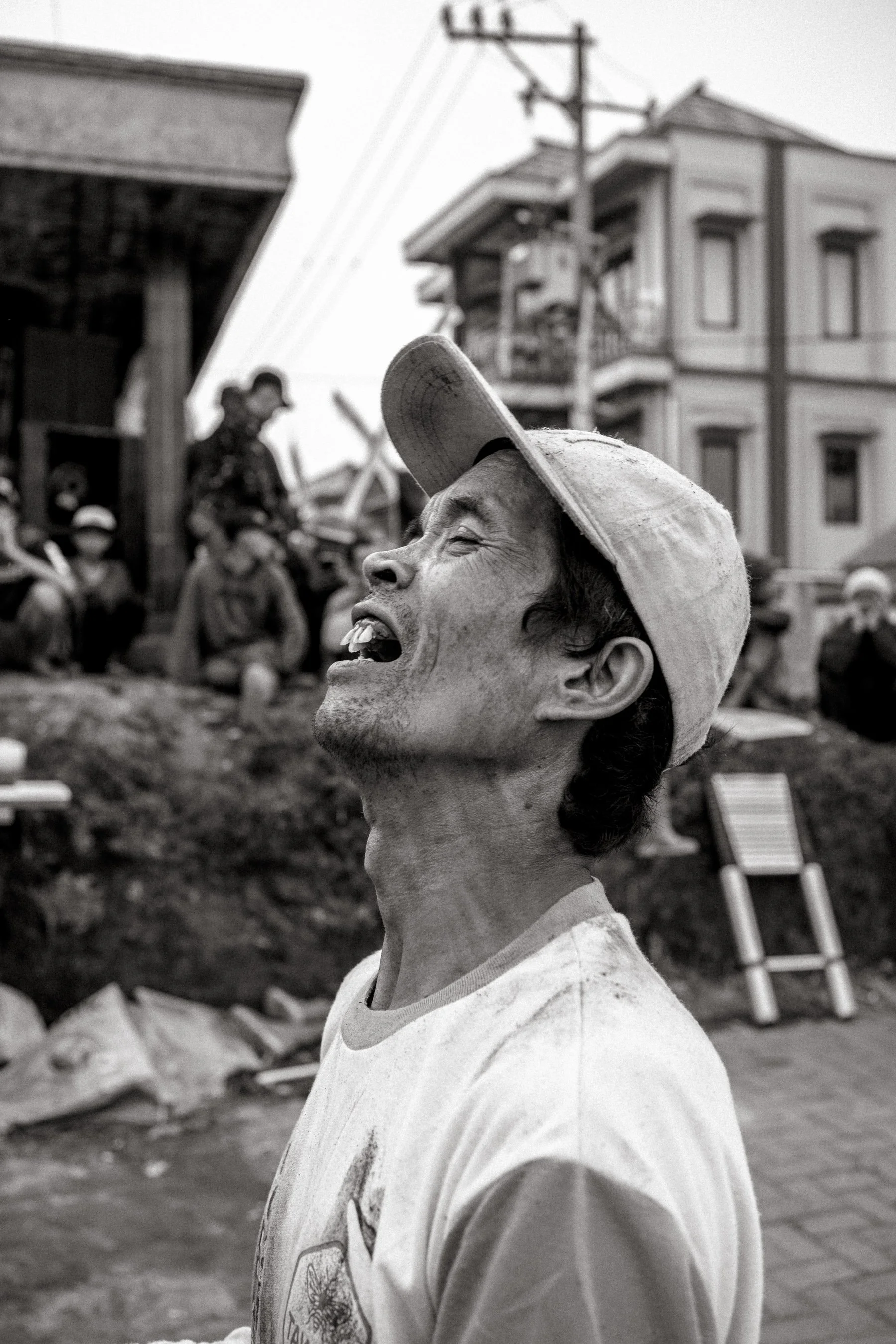
A competitor reacts after a failed attempt. He stands back from the climbs, calling out to teammates, and assists at the base of the pole. Ngadas, East Java, Indonesia. 21 August 2025.
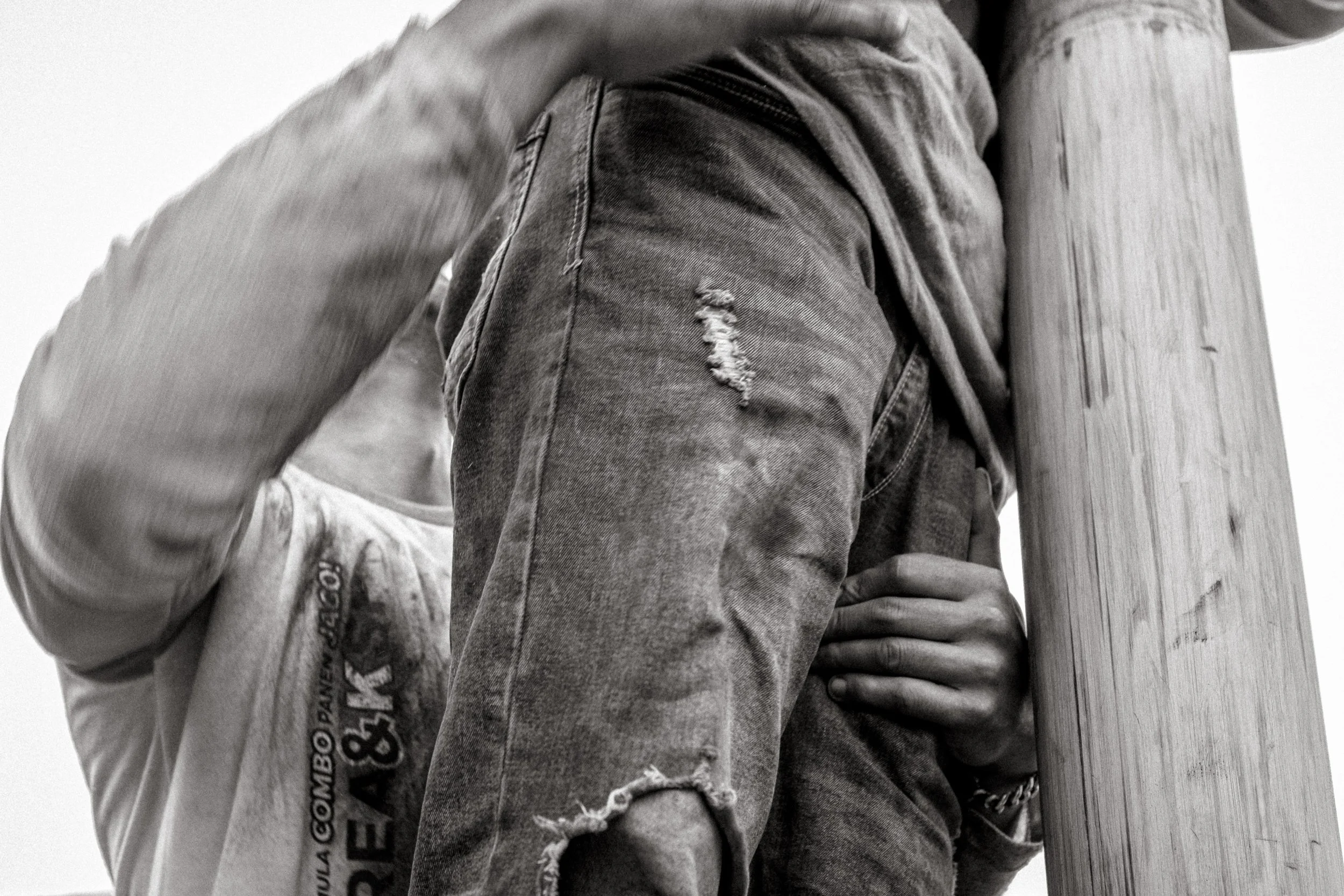
A climber is supported by his legs and waist as he climbs higher. Bodies stack and grip the pole, dirt and oil visible on their clothes. Ngadas, East Java, Indonesia. 21 August 2025.
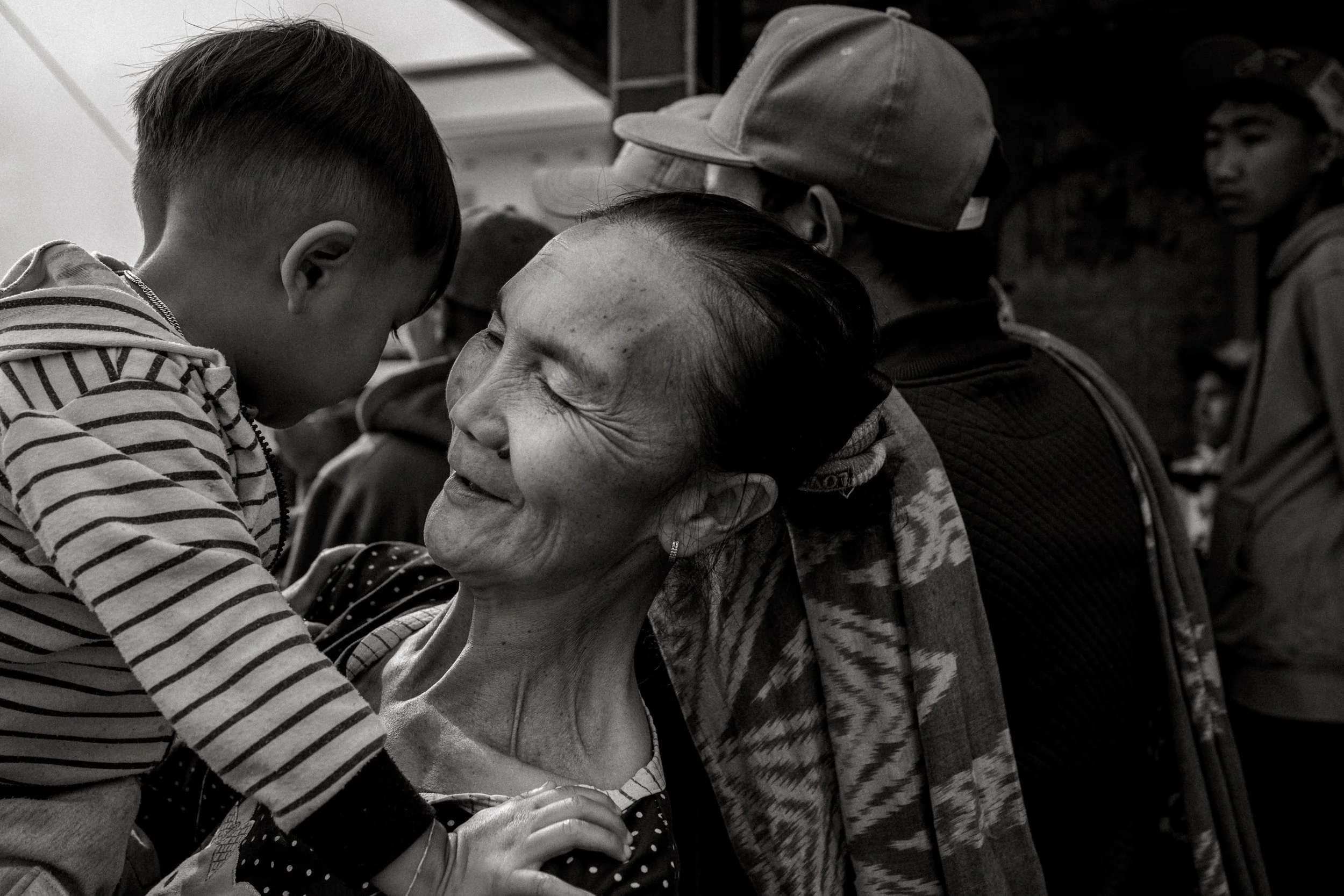
A woman smiles with a child from the edge of the square where spectators gather. She stands among a crowd of men. Ngadas, East Java, Indonesia. 21 August 2025.
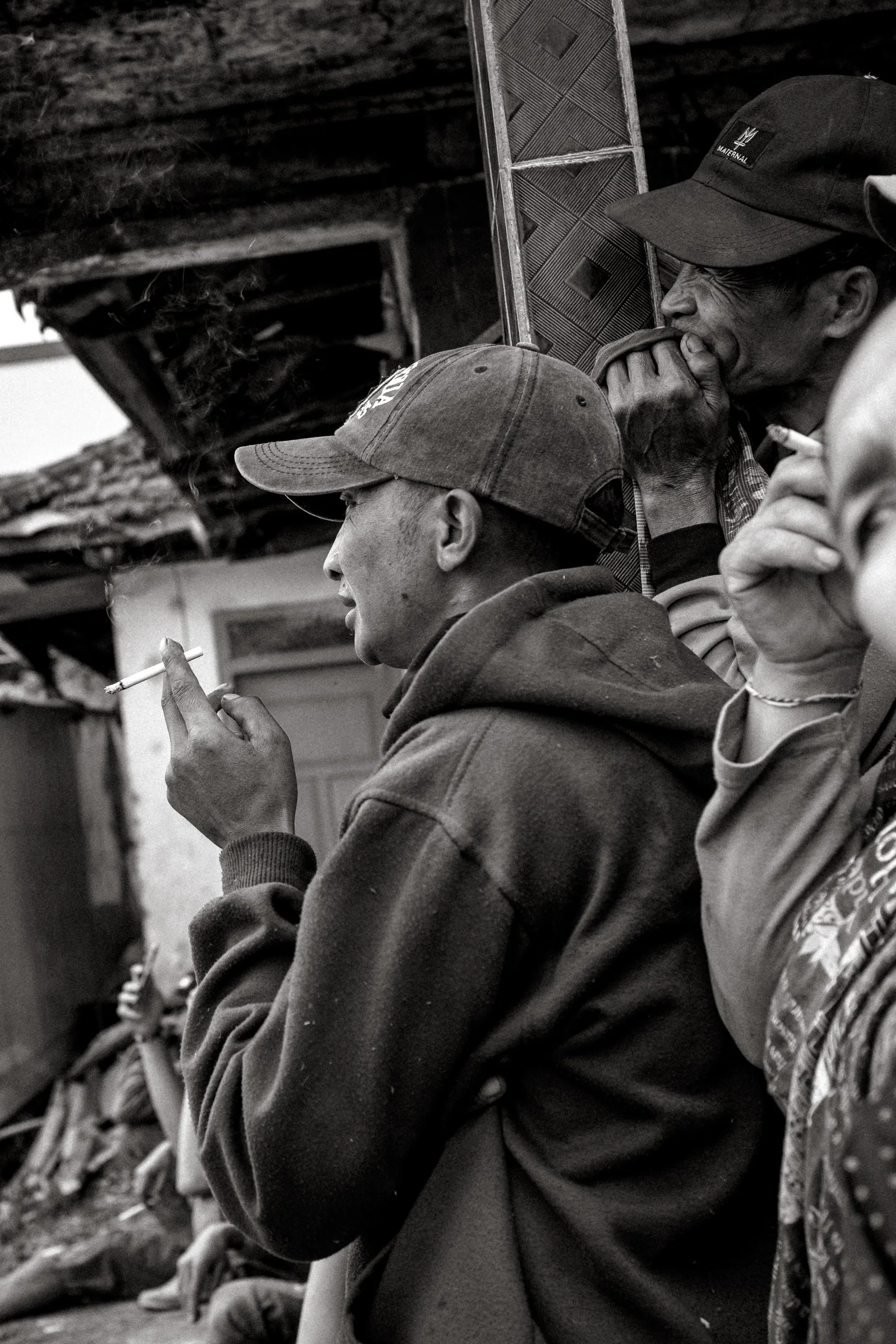
Spectators watch closely from the side, cigarettes in hand. Ngadas, East Java, Indonesia. 21 August 2025.
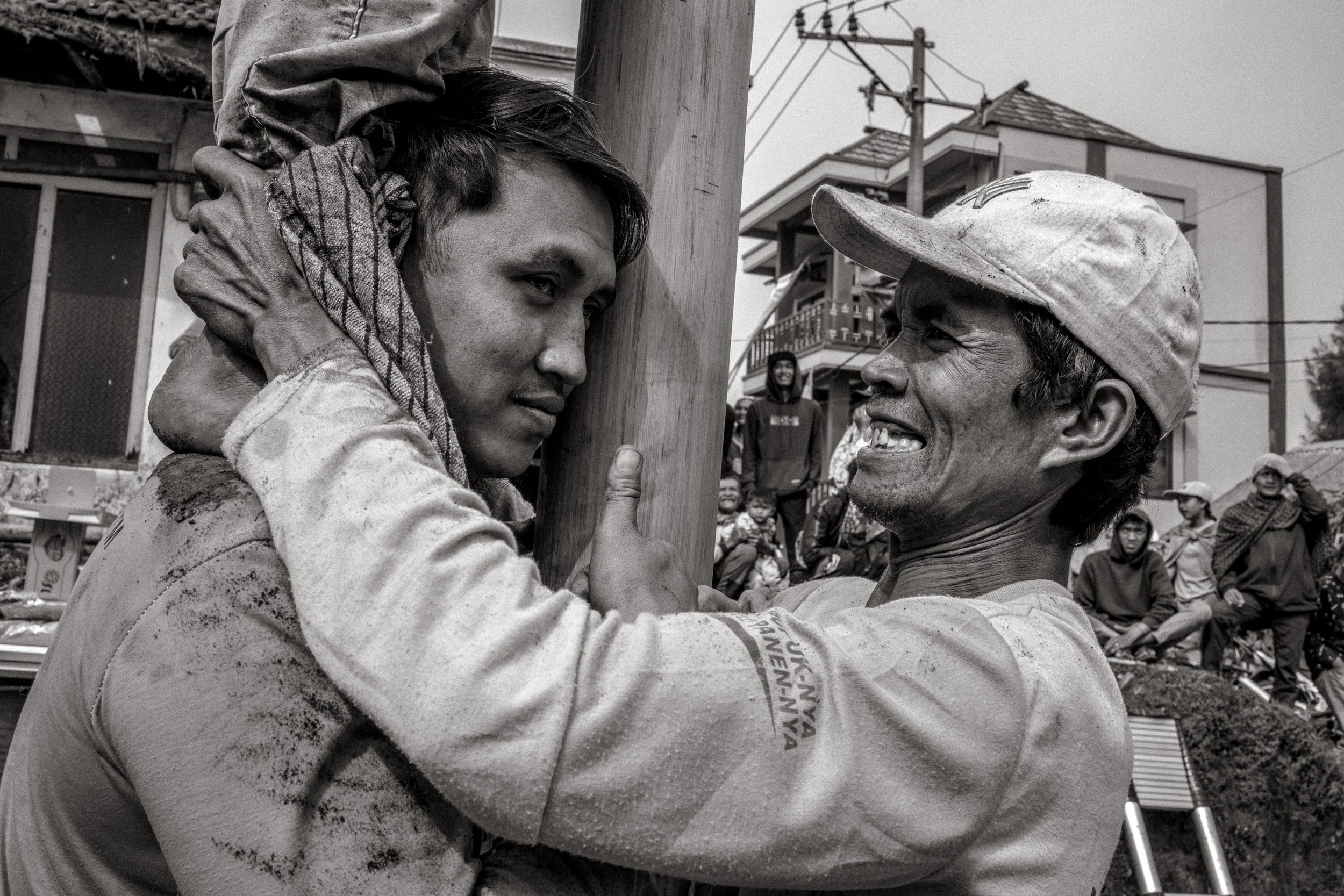
Two competitors brace the pole and grip each other to support the base as teammates climb above them. Behind them, spectators watch from the square. Ngadas, East Java, Indonesia. 21 August 2025.
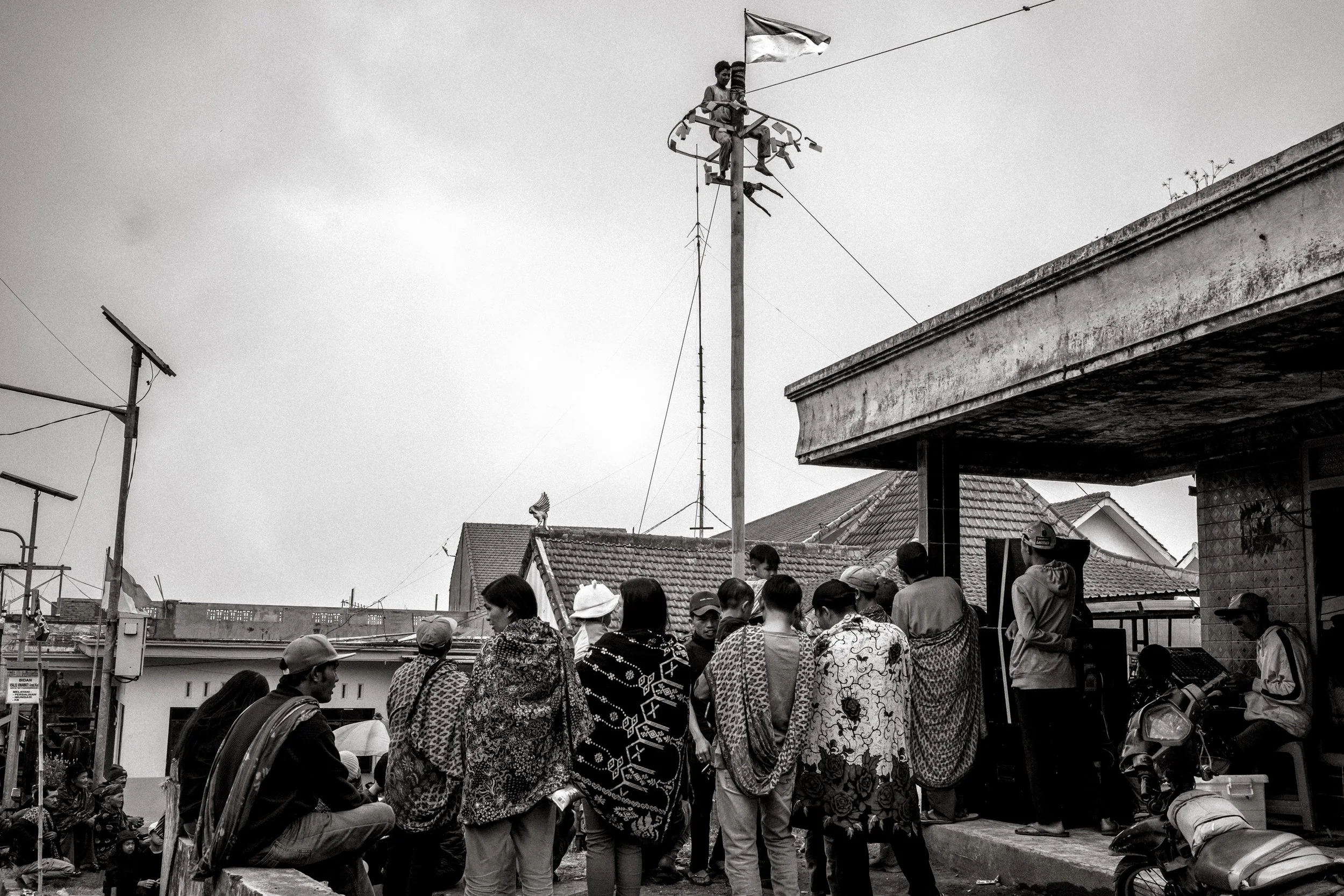
A competitor reaches the top of the greased pole beside the Indonesian flag, as spectators watch from the side. Ngadas, East Java, Indonesia. 21 August 2025.