Nyongkolan, Central Lombok
Encountered near the village of Sukarara in Central Lombok Regency, Indonesia, this edit follows a Nyongkolan, a public wedding procession within Sasak marriage custom. I arrived without context, invited in as I passed on a scooter, and stayed as the gathering shifted from a crowded dance space into movement along the road. Lombok is often perceived first through Islamic identity. Less legible to outsiders is how Sasak custom shapes social life more broadly, including how Islam is expressed in local practice, and how contemporary popular culture sits alongside both. These photographs explore that overlap as it appeared in a single event.
--SS, 2025
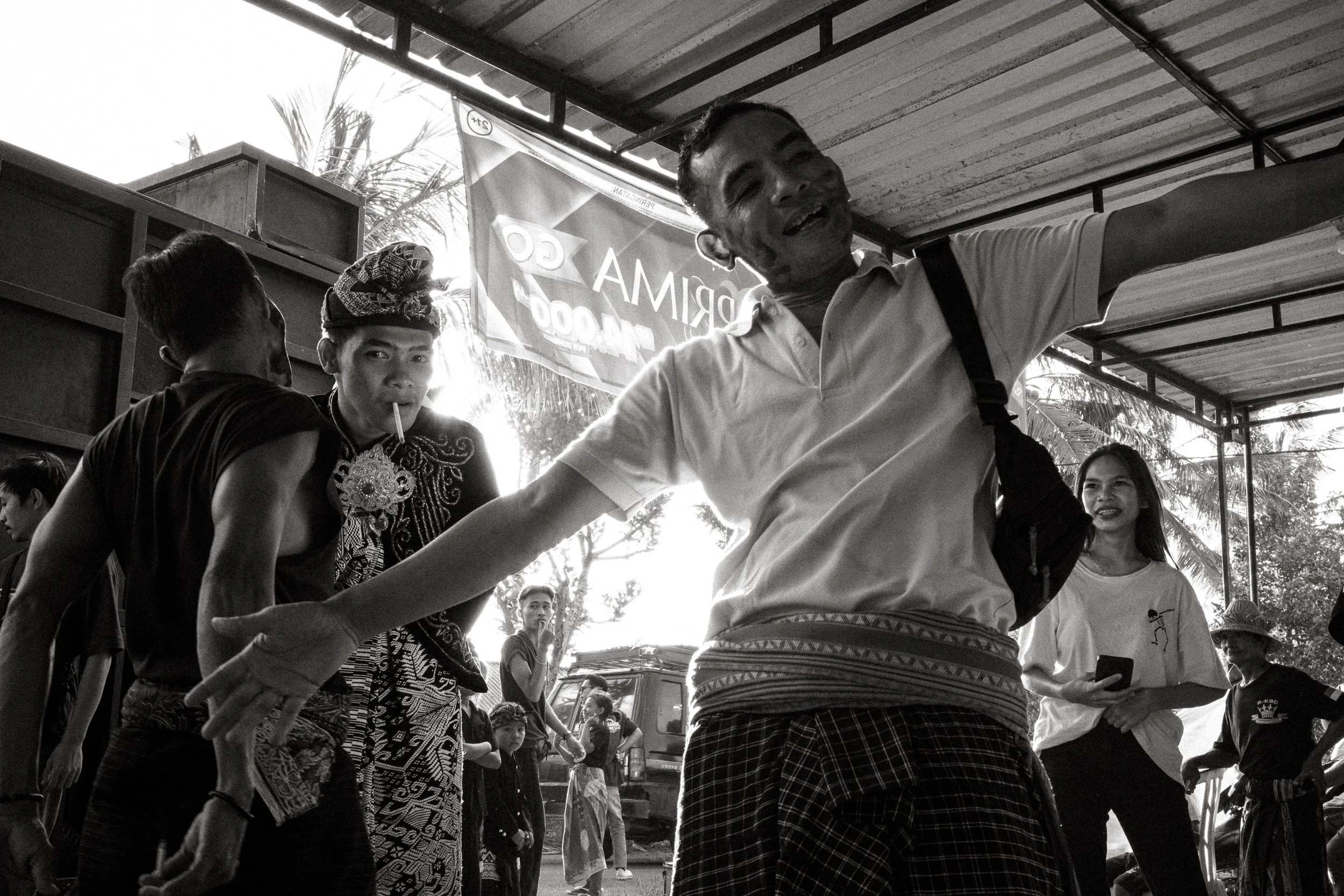
A man dances to music while the groom stands behind him in full Sasak ceremonial dress. Central Lombok, Indonesia. 6 August 2025.
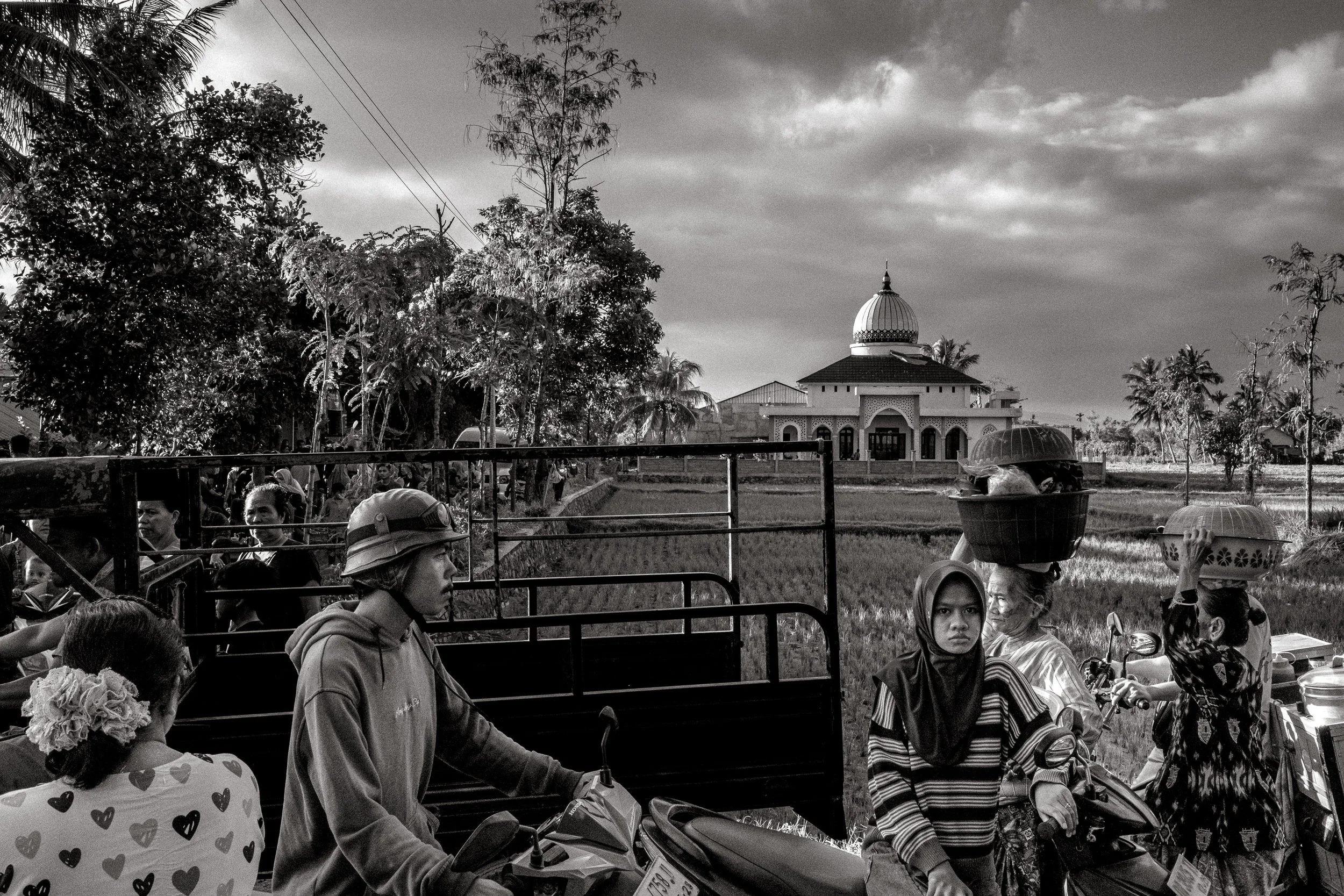
Vehicles and pedestrians share the road as the wedding party moves into a procession. Central Lombok, Indonesia. 6 August 2025.
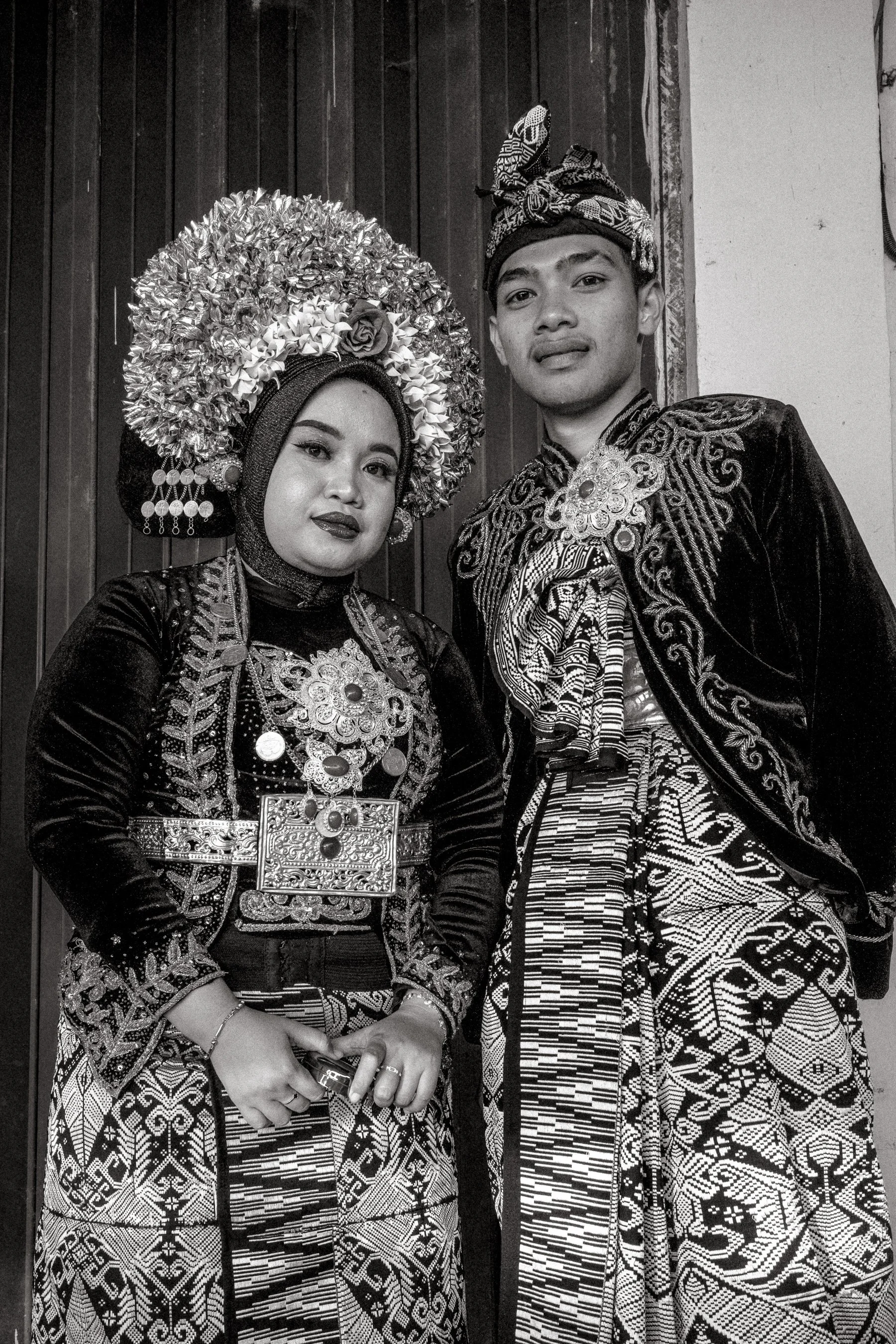
The bride and groom wear formal Sasak ceremonial dress. In many Sasak communities on Lombok, wedding practice commonly combines an Islamic religious framework with customary Sasak tradition. Central Lombok, Indonesia. 6 August 2025.
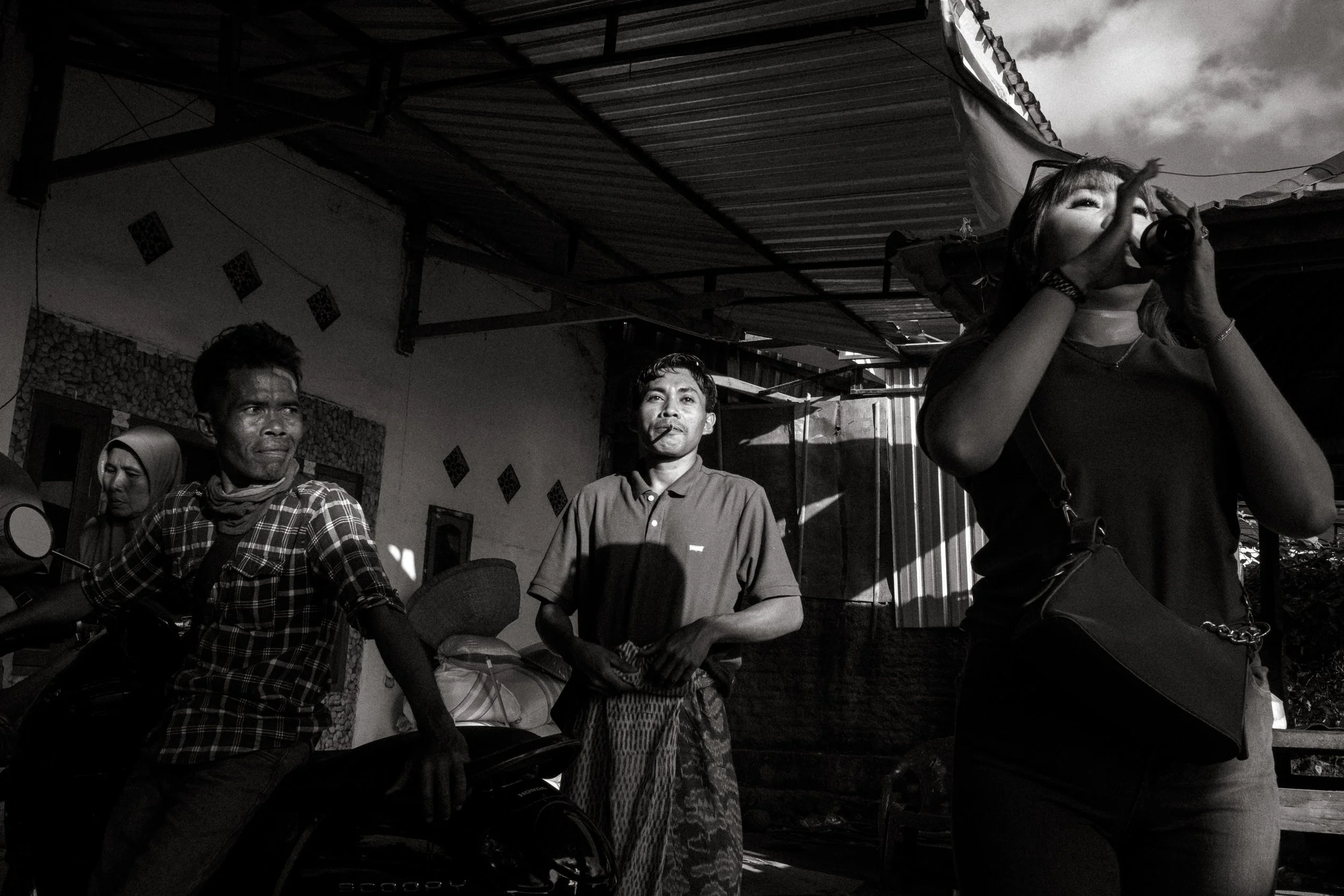
A singer performs into a microphone beside a sound system. Music is central to the Nyongkolan celebration and is seen as something to be enjoyed by all participants. Central Lombok, Indonesia. 6 August 2025.
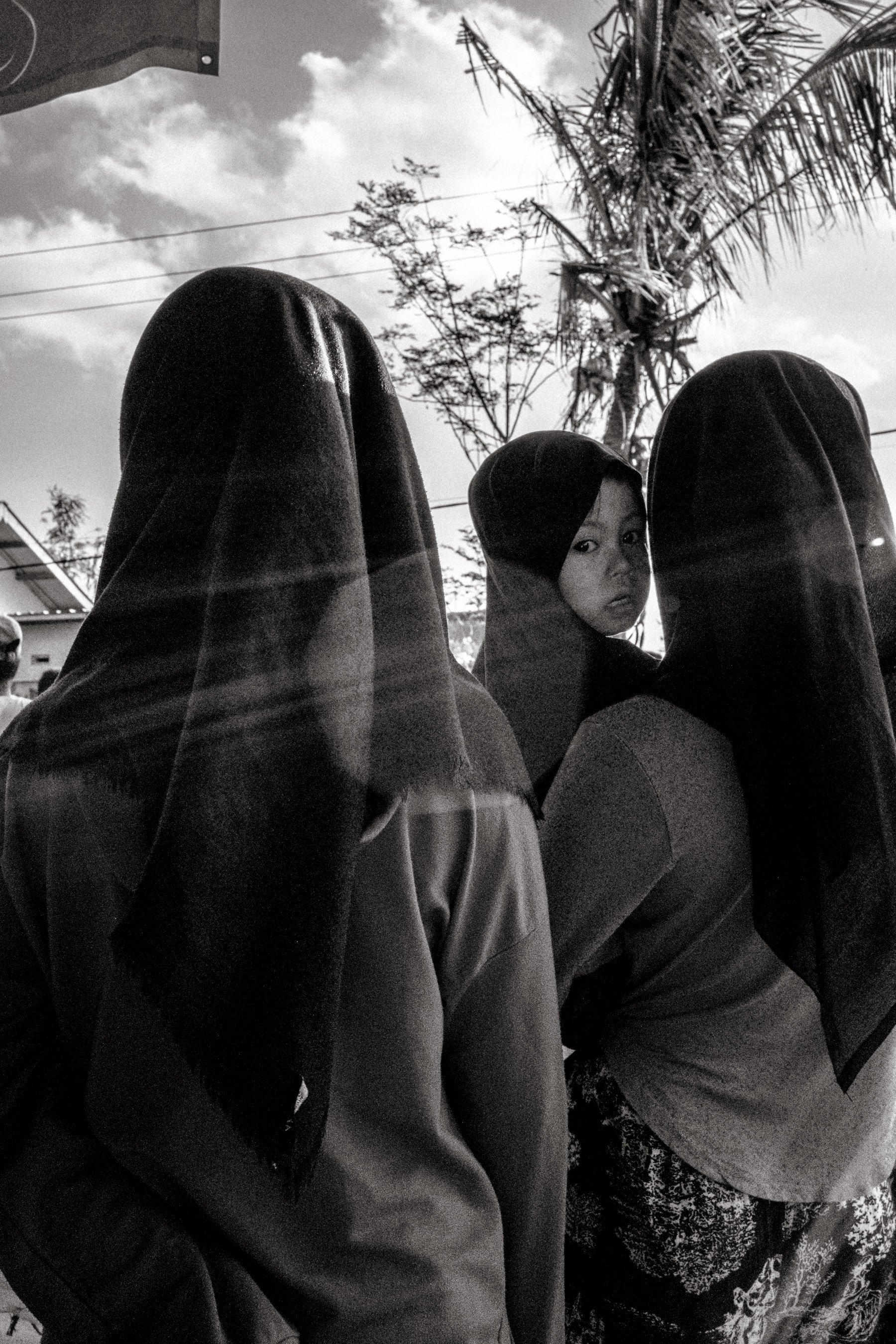
Women stand watching the event, as a small girl looks back. The Sasak are Lombok's largest ethnic group and though adherents of Islam, Islamic observance is refracted through traditional local customs. Central Lombok, Indonesia. 6 August 2025.
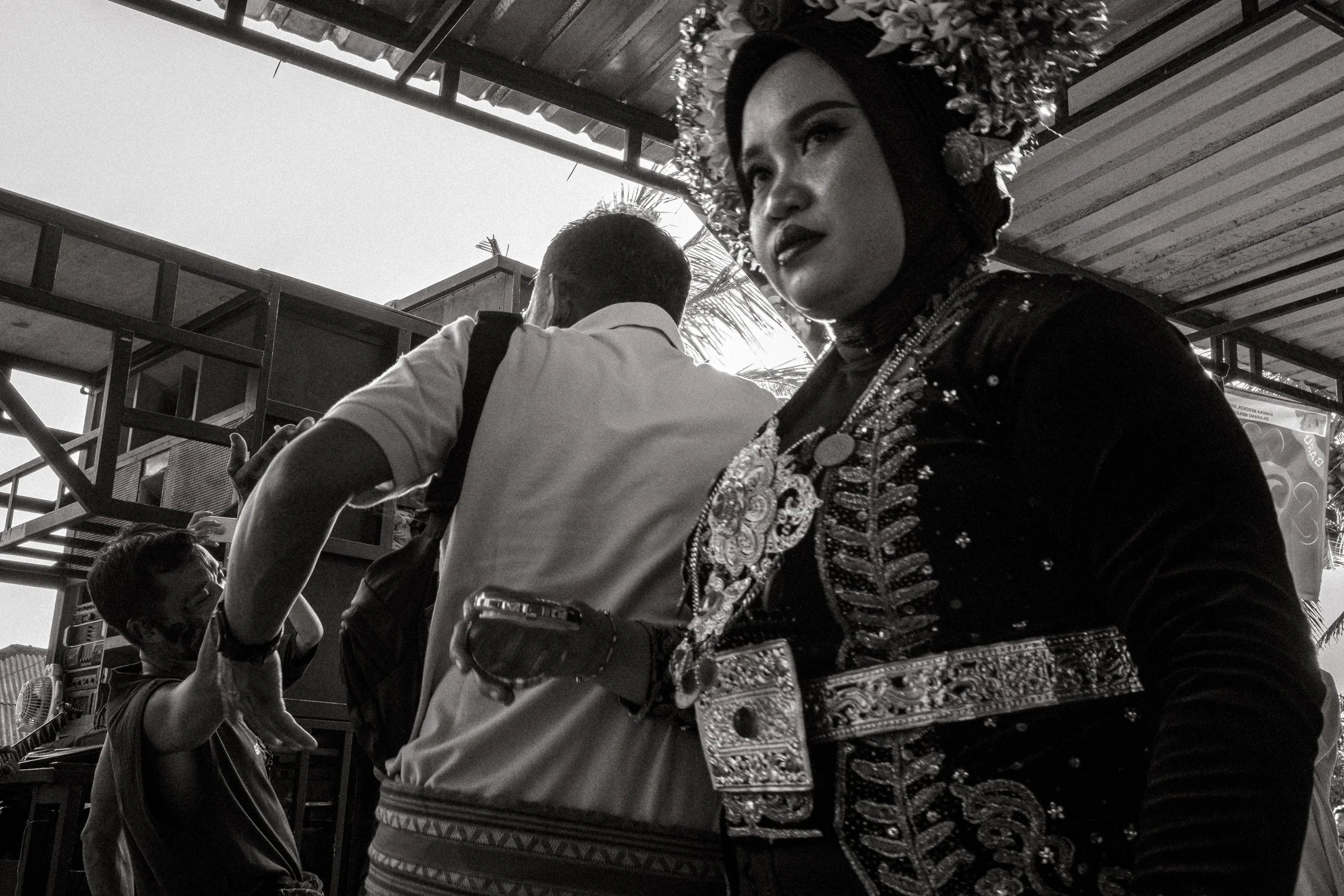
The bride moves through the dance area holding a small case. Central Lombok, Indonesia. 6 August 2025.
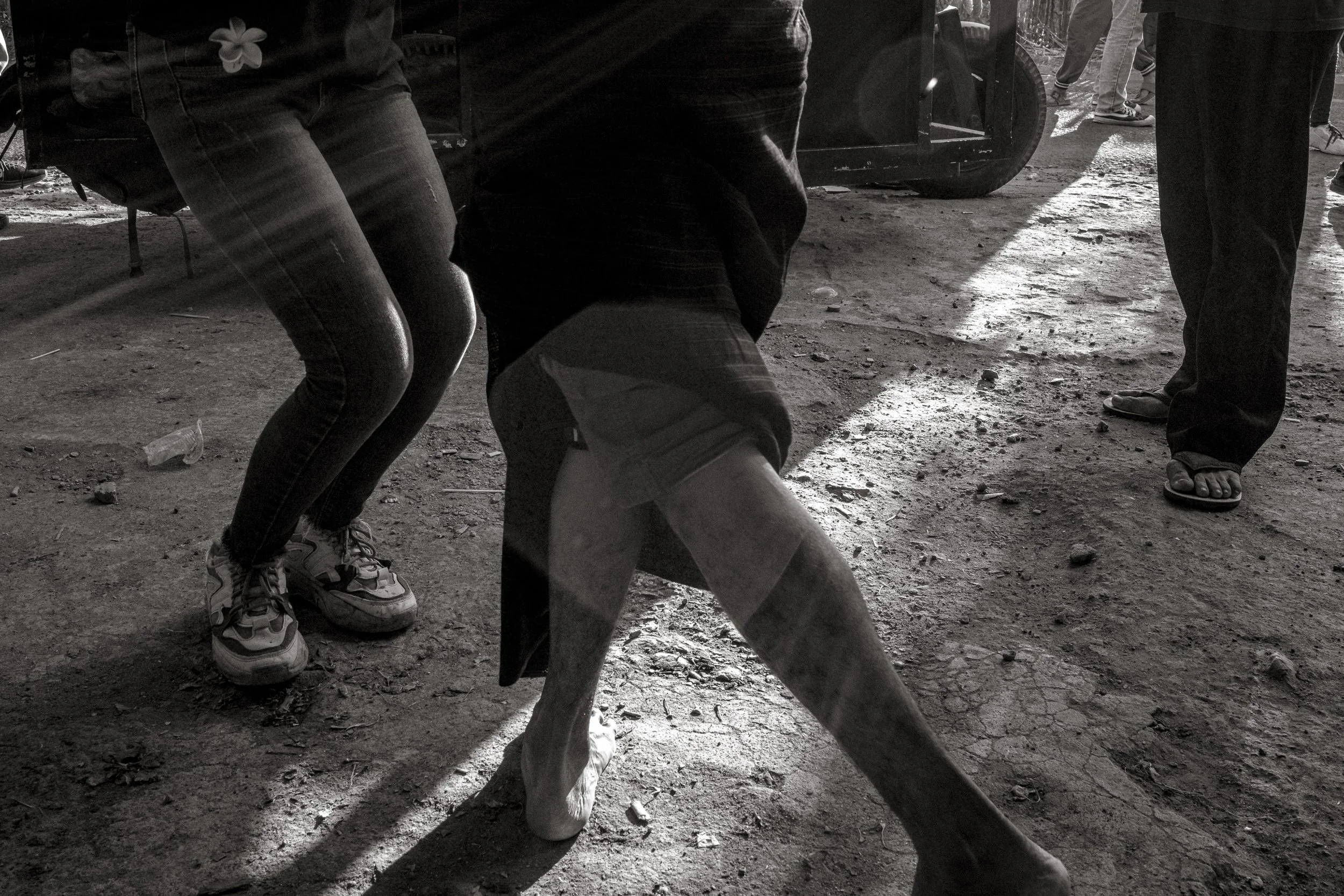
On the dance floor, traditional textiles and bare feet can be seen alongside jeans and trainers. Central Lombok, Indonesia. 6 August 2025.
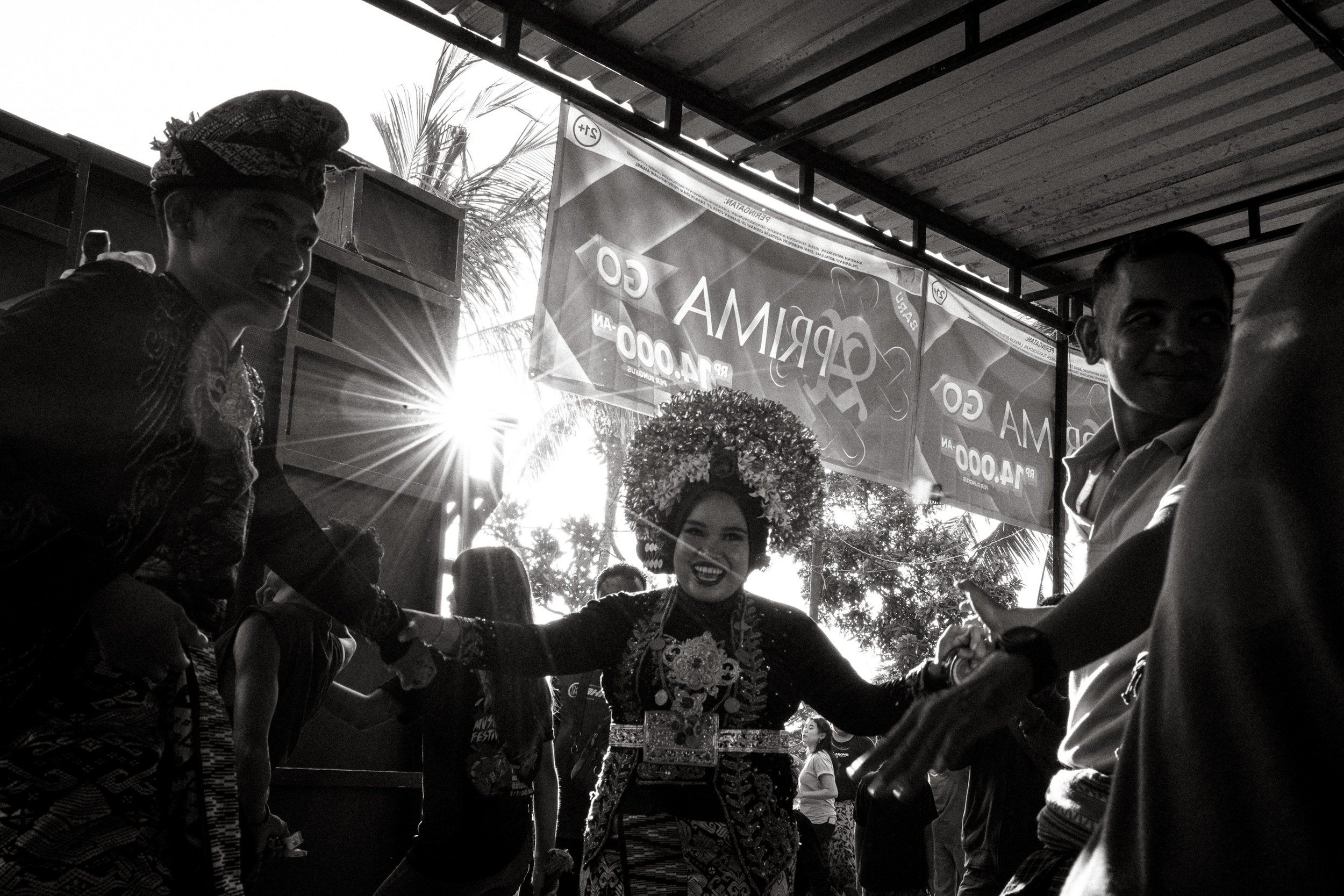
The bride and groom dance in a loose circle, surrounded by their guests. Central Lombok, Indonesia. 6 August 2025.
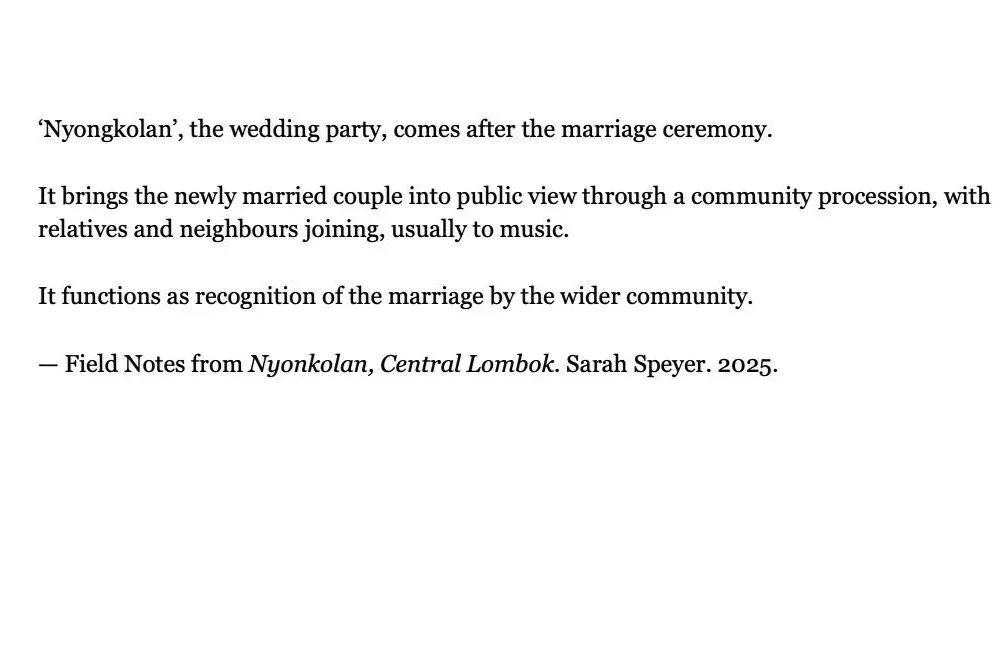
Field notes.
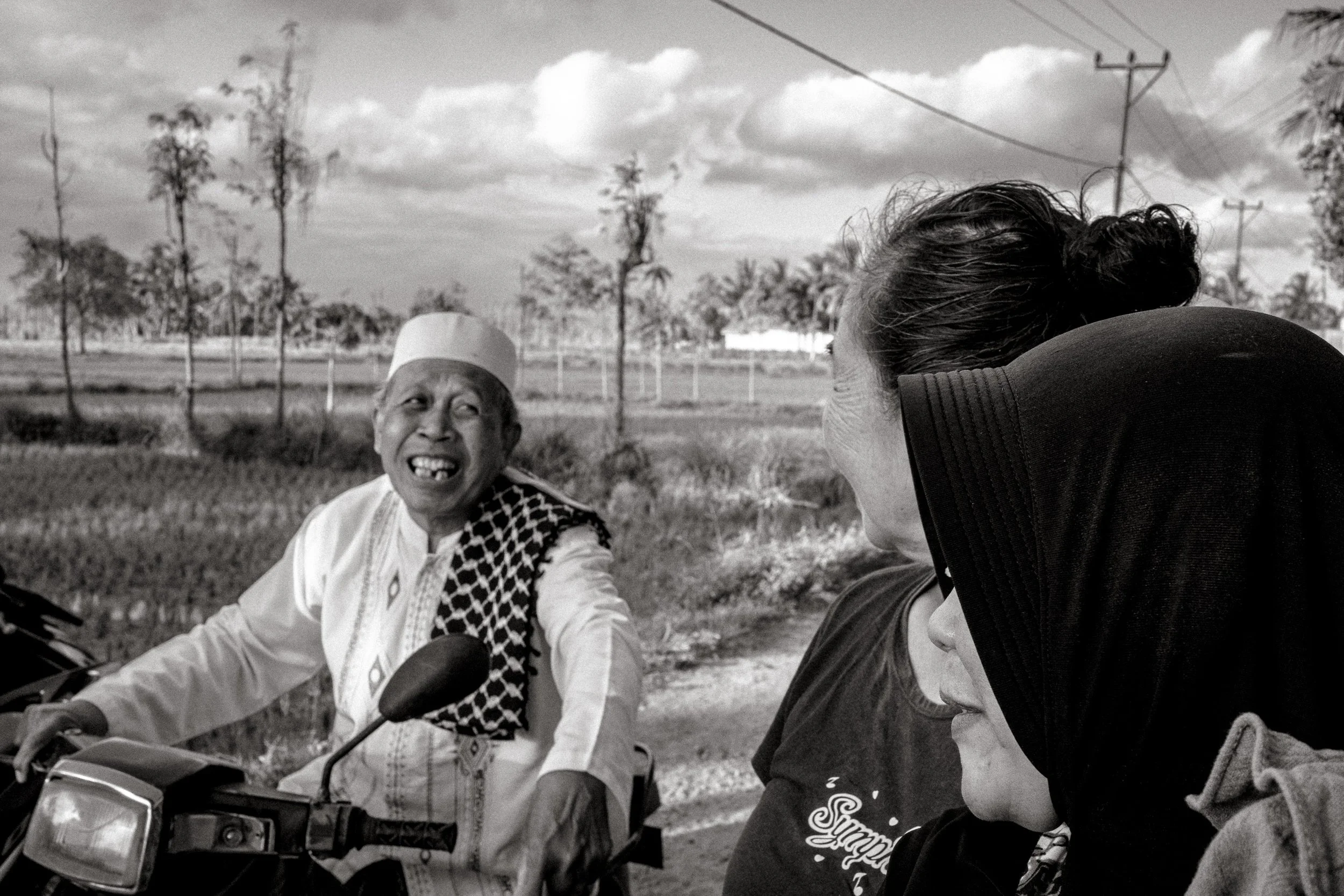
Members of the local village converse during the celebration. Central Lombok, Indonesia. 6 August 2025.
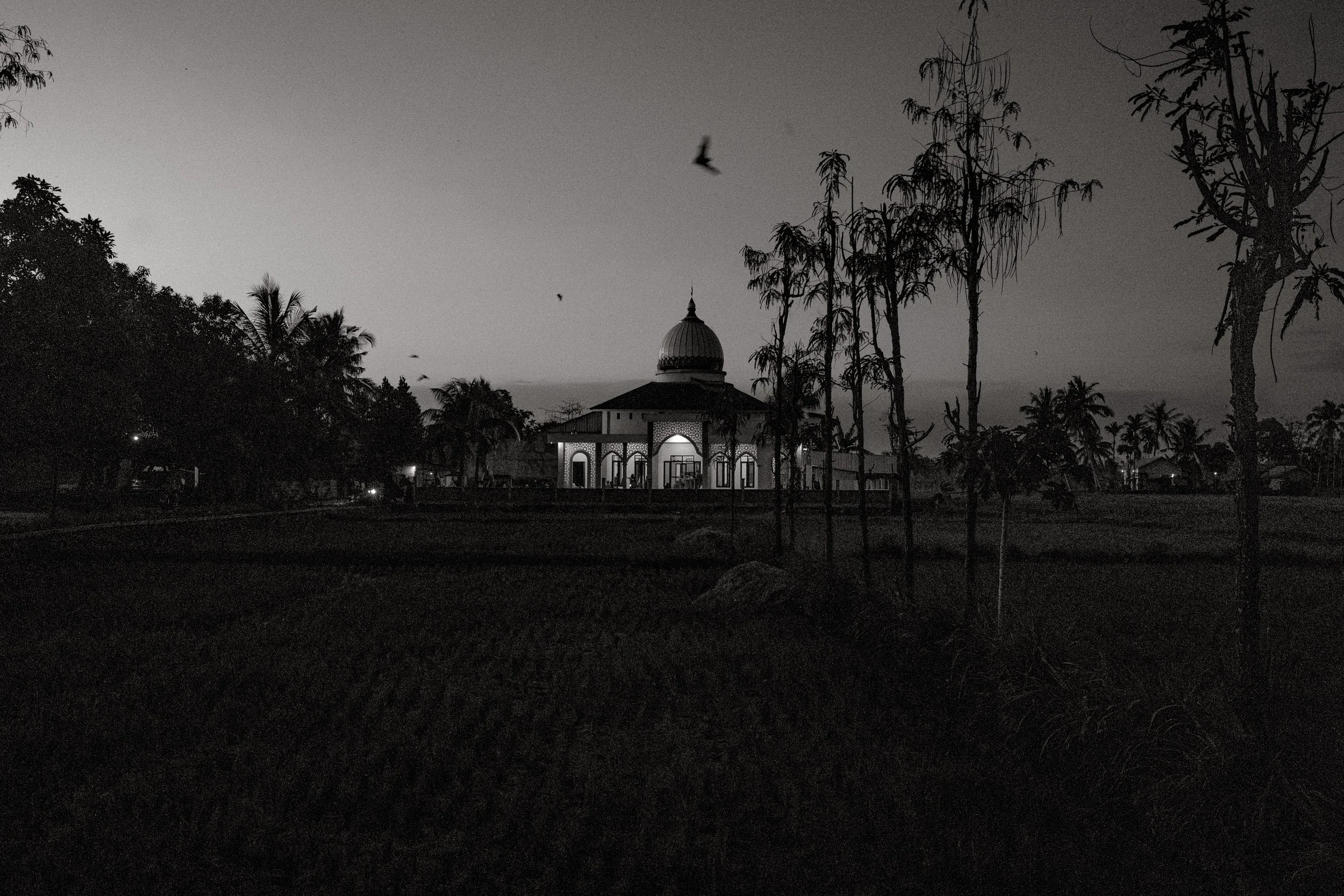
Long after the nyongkolan has ended and the village has returned to calm, men gather at the local mosque for evening prayer. Central Lombok, Indonesia. 6 August 2025.